
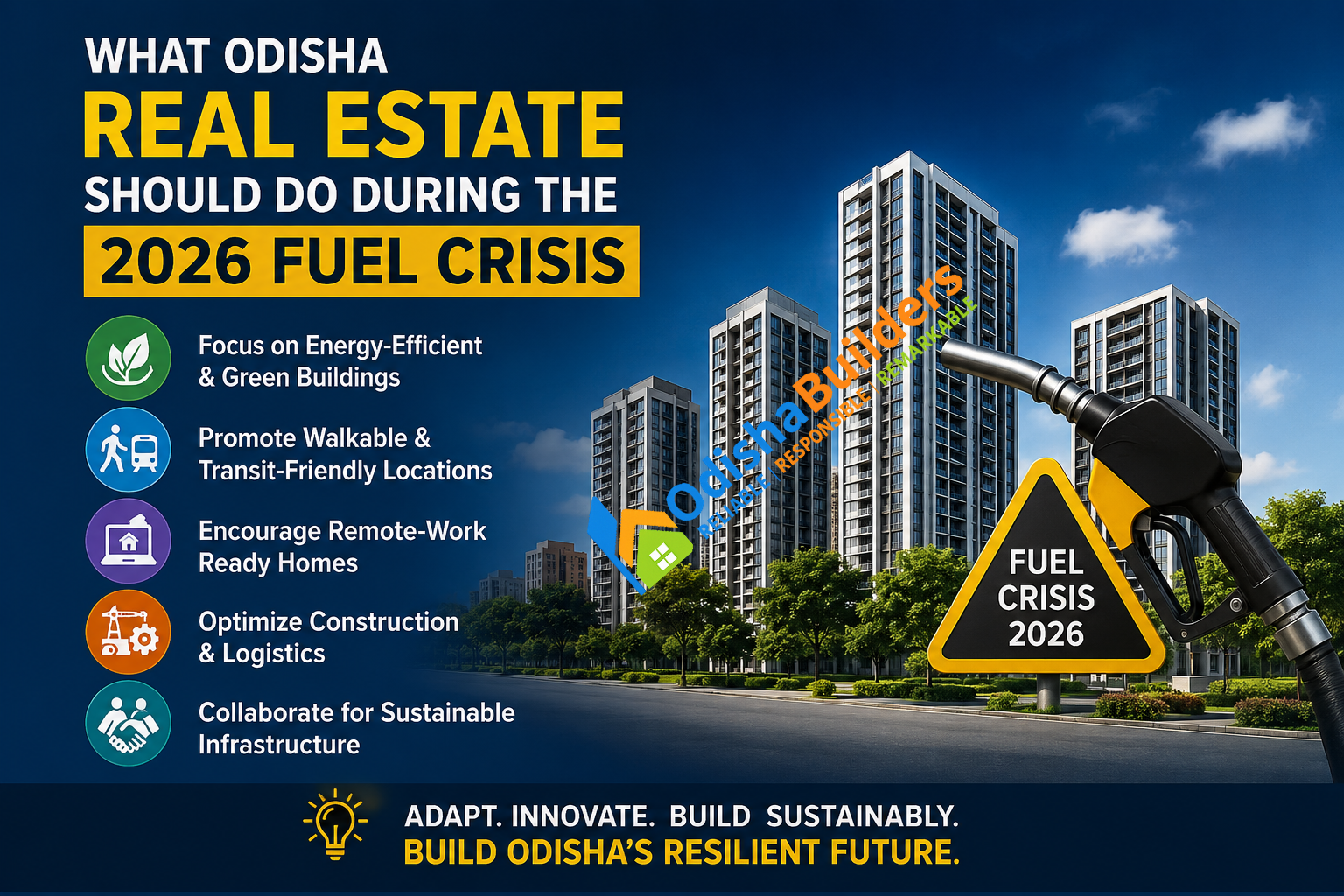
The 2026 fuel crisis has become one of the biggest challenges for India’s construction and real estate sector. Odisha, which is rapidly growing in infrastructure, housing, industrial parks, highways, and urban development, is already seeing pressure on construction costs, logistics, labour movement, and project timelines.
Long queues at petrol pumps, diesel rationing, transport delays, rising logistics costs, and shortages of LPG and fuel have started affecting construction activity across Odisha.
For real estate developers, contractors, builders, homebuyers, and renovation companies, this crisis is not only about fuel prices — it is about survival, planning, customer trust, and project execution.
Fuel directly affects:
As diesel prices and logistics expenses increase, developers face higher construction costs. Industry reports already show increases in cement, steel, aluminium, copper, and finishing material costs.
This means:
Many construction workers depend on affordable transport and LPG for daily living. Reports from Odisha show LPG shortages and worker disruption affecting construction productivity.
Impact on sites:
For real estate companies, labour instability can delay projects by weeks or months.
Transport disruptions and fuel rationing are slowing:
Developers in eastern India are already requesting project timeline extensions due to shortages and cost escalation.
This creates problems for:
Builders should immediately:
Priority materials:
Early procurement can protect projects from sudden market spikes.
Dependence on long-distance logistics increases risk during fuel shortages.
Odisha builders should:
Benefits:
This is not the time for poor scheduling.
Developers should:
Projects with strong planning will survive better than projects running on daily purchasing.
Homebuyers become nervous during crisis periods.
Real estate companies should:
Trust becomes the biggest asset during uncertainty.
Luxury demand may slow temporarily, while affordable housing remains stronger.
Why?
Key cities:
Affordable projects may remain more stable than premium speculative developments.
Avoid:
Choose:
Construction costs may continue increasing if fuel instability continues.
Potential impact:
Experts already estimate significant cost pressure in eastern India’s real estate market.
If you already own land and plan to build:
Waiting too long may increase total construction cost substantially.
For renovation companies and contractors, the crisis can become an opportunity if managed properly.
Customers want price certainty during uncertain times.
Offer:
Site wastage now directly affects profits.
Control:
Use:
Faster communication reduces delays and customer frustration.
A complete crash is unlikely.
But the market may face:
Discussions across Indian real estate communities show increasing concern over construction inflation, buyer hesitation, and delayed projects rather than a total market collapse.
The most affected sectors may be:
Stronger builders with better cash flow will survive and grow.
Every crisis creates opportunities.
Odisha may still benefit because:
Companies that focus on:
will emerge stronger after the crisis.
The 2026 fuel crisis is a warning for Odisha’s real estate sector.
The market is shifting from:
Developers, contractors, renovation companies, and homebuyers must now focus on:
The companies that adapt early will not only survive this crisis — they will dominate the next phase of Odisha real estate growth.
Yes. Rising diesel prices, transport delays, labour disruption, and material shortages are impacting project timelines and construction costs across Odisha.
Property prices may rise because construction materials, logistics, and labour costs are increasing due to the fuel crisis.
If you find a trusted developer and financially stable project, buying earlier may help avoid future price increases.
Major growth cities include:
They should focus on:


Information 5 min read
Read →
Information 5 min read
Read →
Guide 5 min read
Read →
Tips 5 min read
Read →
Tips 5 min read
Read →
Guide 5 min read
Read →
Guide 5 min read
Read →
Information 5 min read
Read →
Information 5 min read
Read →
Guide 5 min read
Read →
Guide 5 min read
Read →
Guide 5 min read
Read →
Analysis 5 min read
Read →
Information 5 min read
Read →
Tips 5 min read
Read →
Guide 5 min read
Read →
Guide 5 min read
Read →
Guide 5 min read
Read →
Guide 25 min read
Read →
Guide 5 min read
Read →